SHEIN: How an Ultra-Fast Fashion Model Is Disrupting the Industry
Mai 1, 2025
In a world driven by speed, digitalization, and personalization, SHEIN has emerged as a symbol of profound disruption in the fashion industry. This Chinese e-commerce giant has reshaped fashion retail with a data-driven, demand-based business model and a hyper-agile supply chain, challenging the legacy of traditional players like Zara and H&M.
A Demand-Driven, Digital-Only Business Model
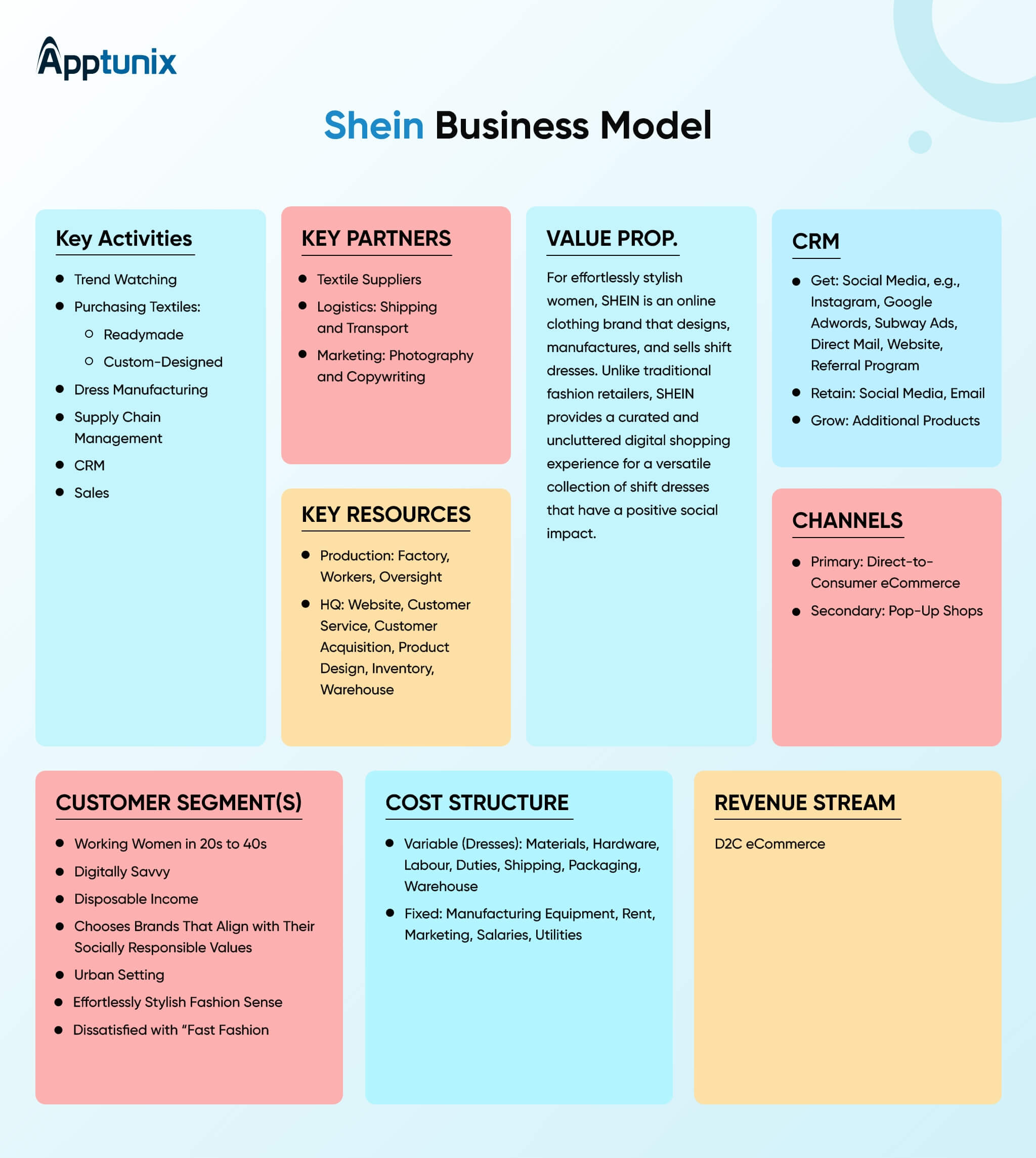
Unlike legacy fast fashion brands, SHEIN operates a purely digital and direct-to-consumer (DTC) model, releasing thousands of new items daily based on real-time data from social media and search trends.
💡 Core business model features:
Fully digital platform: SHEIN sells exclusively online with no physical stores.
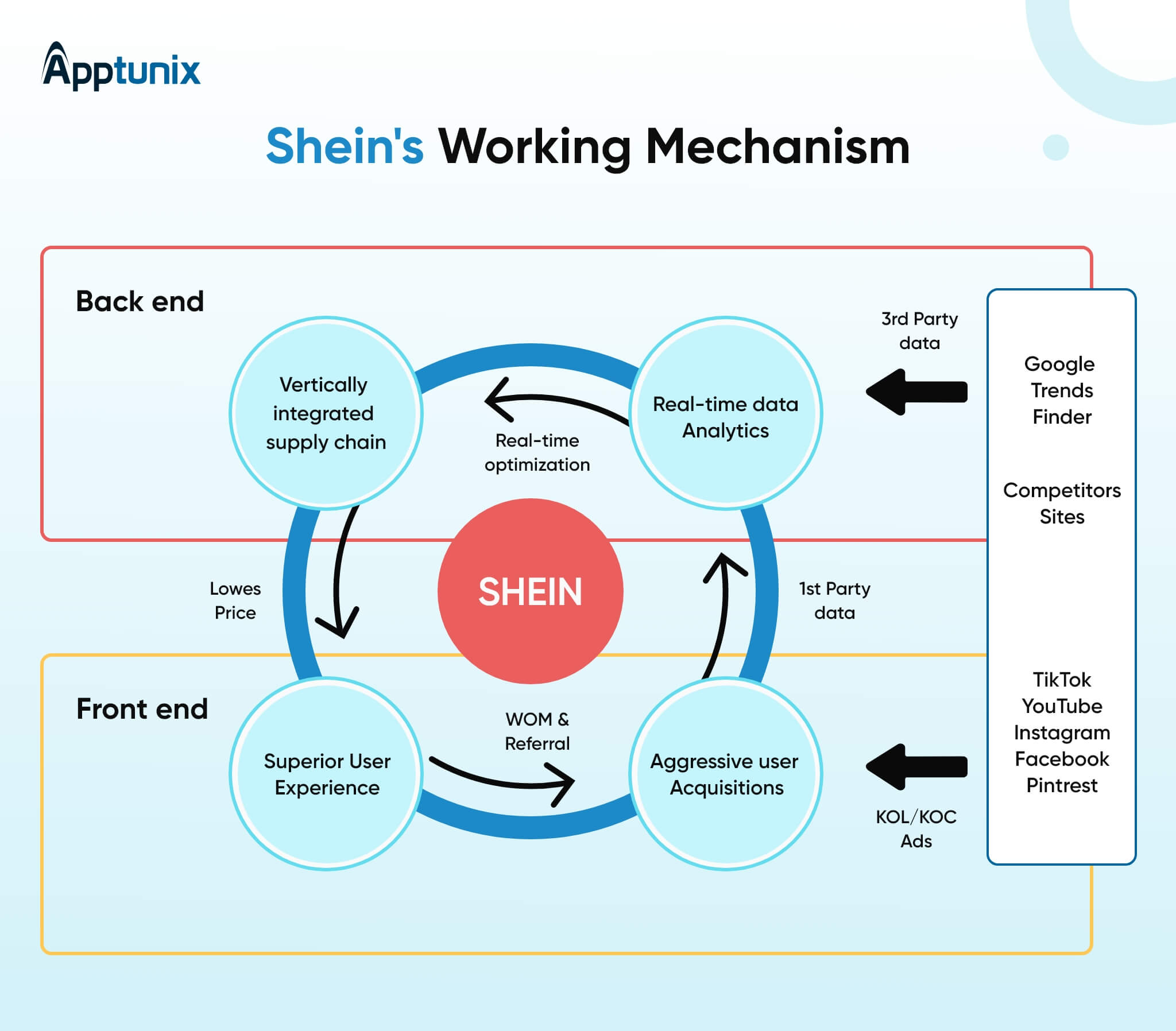
AI-powered trend prediction: The company uses big data and machine learning to track emerging trends across TikTok, Instagram, Pinterest, and Google.
Micro-batch testing: Every new item is launched in extremely small batches (100–200 units) to assess demand before scaling production.
Ultra-short time-to-market: From idea to product listing in as little as 5–7 days.
👉 This « test and react » approach minimizes unsold inventory while maximizing customer alignment, outperforming traditional seasonal production cycles.
A Highly Agile and Digitally Integrated Supply Chain
SHEIN’s logistics and production model is central to its competitive edge. The company has created a digitally enabled, distributed, and responsive supply chain ecosystem.
Key elements of SHEIN’s supply chain strategy:
Small-batch production, refined based on near real-time demand feedback.
Vertically integrated supplier network, mostly located around Guangzhou, with over 5,000 partner manufacturers.
Custom digital platform to coordinate inventory, capacity planning, quality control, and forecasting between SHEIN and its suppliers.
Geographic diversification to reduce risk, with new production hubs in Brazil, Turkey, and India.
“SHEIN is the Amazon of fashion, powered by AI and digital just-in-time.” — Harvard Business School, 2024
Speed: unmatched lead times, with new collections available within days.
Flexibility: product decisions driven by data and consumer behavior.
Low waste and inventory risk: thanks to micro-batch testing and responsive restocking.
Low costs: lean operations and no physical retail overhead.
Ethical and Regulatory Challenges
⚠️ Sustainability & labor concerns: SHEIN has faced criticism regarding labor conditions and environmental impacts due to the high volume and speed of production. (TIME, 2023)
⚠️ Regulatory pressure: In the U.S., changes to the “de minimis” rule and increasing scrutiny on Chinese imports could threaten SHEIN’s cost advantage. (Financial Times, 2024)
A New Retail Blueprint?
SHEIN is more than a disruptor—it’s potentially a platform provider. The company is now exploring the possibility of offering its digital supply chain infrastructure to third parties, through a “Supply Chain as a Service” model. (Business Insider, 2024)
This evolution may position SHEIN as a foundational player in the next era of global retail.


 YAT Conseil